2009-2010: Senior Honors Thesis
Oberlin College
Advisors: Drs. Kathryn Partin and Kara Kile
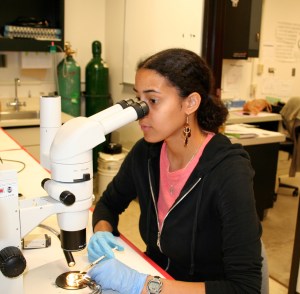
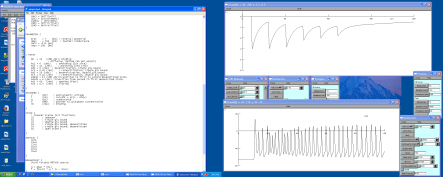
In the summer of 2008, I completed a research for undergraduates (REU) program at Colorado State University, where my job was to create mutant AMPA receptors and test their ability to pass calcium by expressing them in HEK cells and measuring their calcium transients in response to glutamate. Ultimately, these receptors were to be used to determine whether isolated taste cells released glutamate or not, and provide new information on how our taste system works. I loved this experience so much, I came back the next summer to make more mutants, and still didn’t want to give it up— I guess by this time you could say I’d probably chosen the academic career path, because it was too fun to stop. The new mutants were to be used as a proxy for how cognitive enhancing drugs (nootropics) affected synaptic currents; the mutants would basically simulate the effect of each drug. But Oberlin College did not have the same wet lab resources that CSU did. So for my Honors Thesis (2009-2010), I had to figure out how to take my excitement for neurons into a non-wet lab space. I ultimately implemented a computational model of AMPA receptors in a synapse, coding in the receptor changes “induced” by each drug. This was the first time these drugs were evaluated in a strictly synaptic context. It revealed that these drugs, and the slight changes they induced on AMPA receptors, could induce tremendous increases in neuronal firing.
Awards:
High Honors in Neuroscience
The Nancy Robell Memorial Scholarship in Neuroscience/Biopsychology
Inducted into Phi Beta Kappa
Inducted into Sigma Xi
 Andrea L McQuate